General Contact
+6011-1104 9280Appointments
WhatsApp Us Now

Healthy Teeth, Happy Life
©Fadason Dental Sdn Bhd 2025. All Rights Reserved


Dental implants have become the gold standard for replacing missing teeth. They look, feel, and function like natural teeth—restoring confidence, chewing ability, and overall oral health. But what many patients don’t realize is that the success of an implant depends not only on the implant itself, but also on the accuracy of its placement. This is where implant surgical guides play a major role.
A dental implant is an artificial tooth root made of titanium or zirconia. It is placed into the jawbone to replace a missing tooth. After the bone naturally heals and fuses around the implant—a process called osseointegration—the implant becomes a strong, permanent foundation for a crown, bridge, or denture.
A complete implant restoration typically consists of three parts:
Dental implants are widely considered the closest replacement to natural teeth because they look, feel, and function like real teeth.
A surgical guide is a custom-made template—usually 3D-printed—that helps the dentist place the dental implant in the exact planned position. It fits over your teeth or gums like a mouthguard and has precise channels that direct the drilling and implant placement with high accuracy.
Surgical guides are created using:
Once the planning is complete, the guide is printed and used during the implant surgery.
Using a surgical guide significantly improves the accuracy, safety, and predictability of implant treatment. Here are the key benefits:
Guided surgery ensures the implant is placed at the ideal angle, depth, and location. Proper positioning is critical for long-term success and for achieving strong, natural-looking results.
Correct placement helps ensure the final crown emerges naturally from the gums, matching the shape and alignment of your other teeth.
Because guides are based on detailed scans, your dentist knows exactly where nerves, sinuses, and anatomical structures are. The guide helps avoid these areas and reduces the risk of complications.
Guided implant placement often allows for flapless surgery, meaning no major incisions. This can lead to:
With the implant position already planned digitally, the surgery itself becomes faster and more efficient.
Digital planning removes much of the guesswork, making outcomes more consistent and reliable—especially important for multiple implants or full-arch treatments.
Many patients worry about pain during implant surgery, but modern techniques and technology make the experience much more comfortable than expected.
It’s normal to experience:
These symptoms are generally manageable with:
Patients often report that implant placement is less painful than a tooth extraction, most do not even feel any pain after the procedure. Guided surgery, because of its precision and minimal tissue trauma, usually results in faster healing and significantly less post-operative discomfort.
Dental implants are designed to be a long-term, often lifetime solution for missing teeth.
Dental implants may cost more upfront than dentures or bridges, but they are often the most cost-effective long-term option.
Many patients find that implants save money over time because:
Our clinics offer:
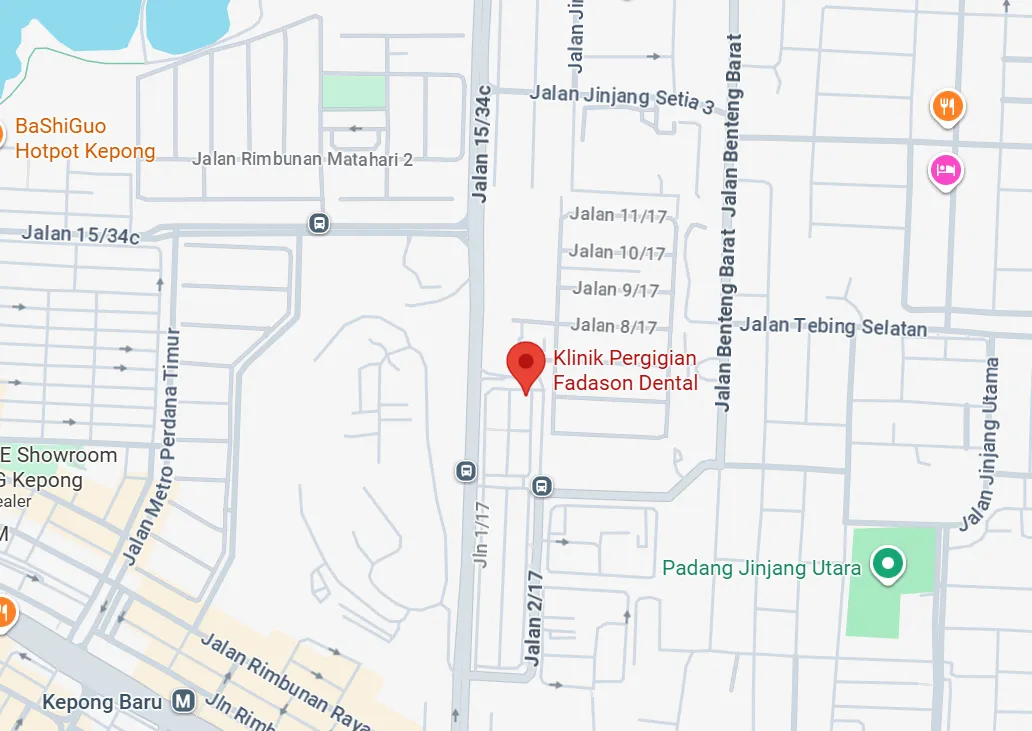
We're open daily, schedule for an appointment with us or simply drop by if it's urgent. Navigate to our clinic via the buttons below.