General Contact
+6011-1104 9280Appointments
WhatsApp Us Now

Healthy Teeth, Happy Life
©Fadason Dental Sdn Bhd 2025. All Rights Reserved


Have you noticed that your teeth look more yellow or stained than before?
Coffee, tea, certain foods, tobacco and natural ageing can all affect the colour of your teeth over time. Even with regular brushing, some stains may remain, making your smile look less bright than you would like.
If you're considering teeth whitening in Kepong, Kuala Lumpur, professional dental whitening at Fadason Dental can help improve the appearance of certain types of tooth discolouration.
But how does teeth whitening work? Is it painful? How much does it cost in Malaysia, and how long can the results last?
In this guide, we'll explain what to expect from teeth whitening, the difference between whitening and scaling, and how to decide whether whitening is suitable for you. Explore our teeth whitening treatment options.
Professional teeth whitening is a cosmetic dental treatment designed to lighten the colour of natural teeth using whitening agents.
Unlike regular brushing or scaling, whitening treatment aims to reduce certain stains and discolouration within the tooth structure.
Whitening products commonly use peroxide-based ingredients, such as hydrogen peroxide or carbamide peroxide, in carefully selected concentrations.
A dentist can assess your teeth and gums before recommending whether whitening is appropriate.
Professional teeth whitening may be considered if you have:
However, whitening does not work equally well for every type of discolouration. Results depend on the underlying cause and individual tooth characteristics.
Understanding why teeth change colour can help you choose the right treatment.
Coffee and tea contain pigments that can gradually stain the surface of teeth, particularly with frequent consumption.
Tobacco products can cause stubborn yellow or brown stains and contribute to other oral health problems.
As we age, the outer enamel may become thinner, making the naturally yellowish dentine underneath more visible.
Dark-coloured foods and drinks, including certain sauces and soft drinks, can contribute to staining. Discover the 5 surprising foods that actually stain your teeth.
Some discolouration is related to medications, dental development, previous trauma or changes within the tooth.
These stains may not respond to conventional whitening in the same way as common yellowing.
There are several ways to whiten teeth, but they differ in effectiveness, convenience and suitability.
In-clinic whitening is performed under dental supervision.
The dentist assesses the teeth, protects the surrounding soft tissues as appropriate, and applies a professional whitening agent according to the selected treatment protocol.
Potential advantages:
The degree of whitening varies, and some patients may experience temporary tooth sensitivity.
Some dental clinics offer professionally supervised whitening systems for home use.
These may involve custom-fitted trays and whitening gel, with instructions on how often and how long to wear them.
Potential advantages:
Ask your dentist whether a supervised take-home option is available and suitable for you.
Whitening strips, gels and toothpastes are available for home use.
Some products can help remove surface stains or lighten teeth, depending on their ingredients.
However, results and safety vary between products.
Avoid unregulated whitening products or excessive use, as these can cause irritation or tooth sensitivity.
The exact procedure depends on the whitening system used and your dental condition.
A typical professional whitening process may include the following steps.
Your dentist checks your teeth and gums to identify tooth decay, gum inflammation, exposed roots, existing restorations or other concerns.
Whitening may need to be postponed until relevant dental problems are addressed.
Your dentist may assess your current tooth shade and discuss your desired outcome.
It is important to have realistic expectations because whitening results differ between individuals.
For in-clinic whitening, the dentist may use protective materials to reduce contact between the whitening agent and the gums or other soft tissues.
The whitening product is applied according to the manufacturer's instructions and the dentist's treatment plan.
The application time and number of cycles vary by system.
After treatment, your dentist assesses the result and explains how to manage sensitivity and maintain your new tooth shade.
Some patients may require additional treatment sessions or another approach to achieve their desired result.
Many patients ask whether scaling and polishing can make teeth white.
Both treatments can improve the appearance of teeth, but they have different purposes.
Which treatment should you choose?
If your teeth look stained because of plaque, tartar or surface deposits, scaling and polishing may be the appropriate first step.
If your teeth are healthy but you want a lighter natural tooth shade, whitening may be worth discussing with your dentist.
A dental examination can help determine which treatment is more suitable.
Professional teeth whitening is generally well tolerated, but some patients experience temporary sensitivity during or after treatment.
You may notice:
Sensitivity usually settles, but the intensity and duration vary.
Your dentist may recommend desensitising products, adjustments to the whitening schedule or other measures based on your condition.
If you already have sensitive teeth, let your dentist know before treatment.
Teeth whitening results are not permanent.
The duration depends on factors such as:
Some patients maintain visible results for many months or longer, while others notice staining return sooner.
Regular dental care and appropriate lifestyle habits can help maintain the appearance of your teeth.
Teeth whitening prices in Malaysia vary depending on the dental clinic and treatment method.
The total cost may be influenced by:
For an accurate teeth whitening quotation at Fadason Dental in Kepong, contact the clinic for an assessment and the latest available treatment information.
Choosing whitening based only on the lowest advertised price may not be the best approach. Professional assessment, treatment suitability and appropriate supervision are important considerations.
Teeth whitening is not appropriate for everyone.
A dentist may advise delaying or avoiding whitening if you have:
Whitening agents do not change the colour of crowns, veneers or existing fillings in the same way they lighten natural teeth.
Pregnant or breastfeeding patients are generally advised to postpone elective cosmetic whitening because safety evidence is limited.
After whitening, your dentist may recommend the following:
Brush twice daily with fluoride toothpaste and clean between your teeth regularly.
Reducing frequent exposure to coffee, tea and other strongly pigmented drinks may help maintain your tooth shade.
Avoiding smoking and tobacco use supports both your smile's appearance and your overall oral health.
Use any desensitising products recommended by your dentist, and follow the aftercare instructions provided.
Routine dental care helps maintain oral health and allows your dentist to monitor changes in tooth colour.
Repeated or unsupervised whitening can increase sensitivity and irritation.
Ask your dentist whether maintenance treatment is appropriate rather than whitening too frequently.
A professional consultation helps establish whether whitening is suitable for your teeth and what results you can realistically expect.
At Fadason Dental in Kepong, Kuala Lumpur, you can enquire about a dental assessment to discuss concerns about tooth staining and discolouration.
A dentist can help identify whether the concern is caused by surface staining, natural tooth colour, an existing restoration or another dental condition.
This is particularly useful if you're planning whitening before a wedding, graduation, photoshoot or other special occasion.
When appropriate whitening products are used correctly under professional guidance, whitening is generally considered safe for suitable patients.
However, incorrect use or excessive treatment can cause sensitivity and irritation.
Some yellowish teeth respond well to whitening, but the degree of improvement varies depending on the cause of discolouration and tooth characteristics.
No. Whitening results gradually change over time, especially with frequent exposure to staining foods and drinks.
A dentist may recommend scaling and polishing first if plaque, tartar or surface stains are present.
The appropriate sequence depends on your oral health.
Whitening may help lighten some discolouration associated with coffee and tea. Scaling and polishing may also remove certain surface stains.
Whitening does not lighten existing crowns, veneers or fillings in the same way as natural teeth.
Your dentist can explain whether whitening would create a noticeable colour difference.
The number of sessions depends on the whitening system, your starting tooth shade, the type of discolouration and your desired result.
You can contact Fadason Dental in Taman Fadason, Kepong, Kuala Lumpur, to enquire about dental assessment and the clinic's current whitening treatment options.
Professional teeth whitening may help improve the appearance of stained or discoloured natural teeth, but the results depend on your individual dental condition.
Before choosing a whitening treatment, it is important to understand the cause of discolouration, possible sensitivity and the expected outcome.
A dental consultation can help you make an informed decision.
If you're concerned about yellow or stained teeth and would like to explore your options, contact Fadason Dental to arrange a dental consultation.
Our dental team can assess your oral health, discuss suitable cosmetic dental options and explain the next steps.
Fadason Dental
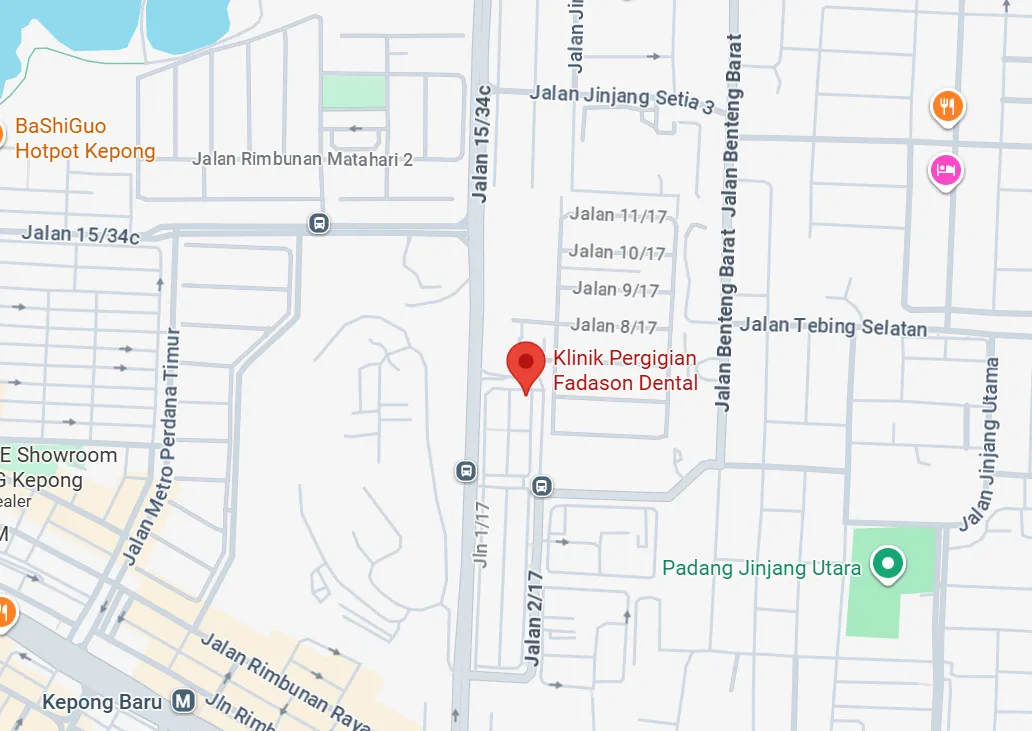
98, Jalan 2/17, Taman Fadason, 52000 Kuala Lumpur, Malaysia
We're open daily, schedule for an appointment with us or simply drop by if it's urgent. Navigate to our clinic via the buttons below.