General Contact
+6011-1104 9280Appointments
WhatsApp Us Now

Healthy Teeth, Happy Life
©Fadason Dental Sdn Bhd 2025. All Rights Reserved


Thinking about straightening your teeth but unsure whether traditional metal braces or clear aligners are the right choice?
Both treatments can help improve tooth alignment and create a more confident smile, but they differ in appearance, comfort, maintenance, treatment suitability and cost.
Traditional braces are a popular option for treating a wide range of orthodontic problems, while clear aligners offer a more discreet, removable alternative for suitable patients.
At Fadason Dental in Kepong, Kuala Lumpur, we offer both traditional braces and clear aligner treatment to help patients explore teeth straightening options that suit their individual needs. Explore our braces treatments options.
In this guide, we'll compare traditional braces vs clear aligners, including their advantages, disadvantages, treatment duration, cost and daily maintenance, so you can make a more informed decision before your orthodontic consultation.
Traditional metal braces are a common type of fixed orthodontic treatment used to straighten teeth and correct various bite problems.
They typically consist of metal brackets attached to the teeth, connected by orthodontic wires and other components.
These appliances apply controlled forces that gradually move teeth into their planned positions.
Traditional braces can help treat various orthodontic concerns, including:
The appropriate treatment depends on the severity and underlying cause of each condition.
1. Suitable for a Wide Range of Orthodontic Problems
Traditional braces can treat many types of dental misalignment, including complex cases that may require precise control over tooth movement.
2. No Daily Wear-Time Tracking
Because braces are fixed to your teeth, you do not need to remember to put them back on after eating.
3. Often a More Budget-Friendly Option
Traditional metal braces are generally among the more affordable orthodontic treatment options available in Malaysia.
However, the final cost depends on your treatment requirements and the dental clinic.
4. Suitable for Teenagers and Adults
Both teenagers and adults may benefit from traditional braces, provided their teeth and supporting tissues are healthy enough for orthodontic treatment.
Traditional braces may be worth considering if you prefer a fixed appliance and are comfortable with its visible appearance.
Clear aligners are transparent, removable orthodontic appliances designed to gradually straighten teeth.
Unlike traditional braces, they do not rely on permanently attached metal brackets and wires.
Instead, a dentist or orthodontist uses dental scans or impressions to plan a series of custom-made aligners.
Each aligner is designed to move selected teeth gradually according to the treatment plan.
Patients wear each set for the prescribed period before moving to the next set.
Clear aligners can be suitable for certain mild to moderate orthodontic problems, including crowded teeth, gaps and some bite issues.
However, they may not be appropriate for every patient, particularly when more complex tooth movements are required.
1. More Discreet Appearance
Clear aligners are made from transparent material that fits closely over the teeth, making them less noticeable than traditional metal braces.
This can be appealing to working professionals, adults and individuals who prefer a subtle orthodontic appliance.
2. Removable for Eating and Cleaning
Clear aligners can be removed when eating, brushing and flossing.
3. Fewer Food Restrictions
Since aligners are removed during meals, patients generally do not have the same restrictions associated with protecting fixed metal brackets.
4. Easier Oral Hygiene
Being able to remove aligners allows you to brush and floss without navigating around brackets and wires.
5. No Metal Brackets or Wires
Clear aligners eliminate the rubbing associated with conventional metal brackets and wires, although the trays and attachments can still cause temporary discomfort.
Clear aligners are also not completely invisible. Some treatment plans require tooth-coloured attachments to help achieve specific tooth movements.
Here is a side-by-side comparison to help you understand the differences between these two orthodontic treatment options.
Important: Clear aligners are not automatically faster, more effective or more comfortable than traditional braces.
The most suitable treatment depends on your orthodontic condition and the treatment plan recommended by your dental professional.
One common misconception is that clear aligners straighten teeth faster because they use newer technology.
In reality, treatment speed depends on several factors rather than the type of appliance alone.
These include:
Some straightforward cases may be completed within a relatively short period, while more complex cases can require considerably longer treatment.
Neither braces nor clear aligners can guarantee faster results for every patient.
Your dentist or orthodontist can provide a more realistic estimate after examining your teeth and bite.
Both traditional braces and clear aligners work by applying controlled forces to gradually reposition teeth.
As a result, some temporary discomfort is possible with either treatment.
After braces are fitted or adjusted, your teeth may feel sore or tender.
Metal brackets and wires can also temporarily irritate your lips or cheeks.
When you first begin treatment or switch to a new aligner, you may experience tightness or pressure.
Some patients may also experience irritation from aligner edges or tooth attachments.
Discomfort often improves as you adjust to the appliance.
However, severe pain, significant swelling or persistent discomfort should be assessed by your dentist.
Cost is an important consideration when choosing orthodontic treatment.
In Malaysia, traditional metal braces are generally among the more budget-friendly options, while clear aligner treatment may involve a higher overall cost.
However, orthodontic fees vary depending on several factors.
Instead of comparing advertised starting prices alone, ask your dentist for a clear explanation of the complete treatment plan and expected costs.
If you are exploring braces in Kepong, Fadason Dental provides information about its available orthodontic services and payment options.
A consultation can help you understand the treatment choices and financial arrangements relevant to your needs.
There is no single best orthodontic appliance for everyone.
The right choice depends on your dental condition, preferences and lifestyle.
Traditional braces may suit people who do not want the responsibility of removing and reinserting aligners throughout the day.
Clear aligners may appeal to individuals who want a less noticeable orthodontic appliance.
Fixed braces may offer a wider range of treatment possibilities for complex cases, although an individual assessment is still necessary.
If you prefer to remove your orthodontic appliance while eating and brushing, clear aligners may be appealing.
However, you must be prepared to follow the prescribed daily wear schedule.
Traditional metal braces may be a more affordable starting point, but the total treatment cost should be assessed alongside the expected benefits and requirements.
The best way to choose is to have your teeth and bite professionally examined before deciding on a treatment.
Before starting braces or clear aligners, your dentist should assess your overall oral health.
The examination may include:
If you have untreated gum disease, your dentist may recommend managing it before beginning orthodontic treatment.
You should also understand that orthodontic treatment does not end when your braces or aligners are removed.
Most patients need retainers after treatment to help maintain their new tooth positions and reduce the risk of teeth shifting again.
Not necessarily. Clear aligners offer advantages in appearance and removability, while traditional braces can treat a wide range of orthodontic problems.
The better option depends on your dental condition, treatment goals and ability to follow treatment instructions.
Clear aligners generally need to be worn for approximately 20–22 hours daily, or as directed by your dentist.
Not wearing them consistently can affect treatment progress.
You can enjoy many foods while wearing traditional braces, but you should avoid certain hard, sticky or chewy foods that may damage the brackets and wires.
Yes. Adults can undergo orthodontic treatment if their teeth, gums and supporting structures are suitable.
A dental examination is important before beginning treatment.
Teeth can shift after orthodontic treatment.
Wearing retainers according to your dentist's instructions helps maintain the results.
If you are considering teeth straightening in Kepong, you can explore the orthodontic services available at Fadason Dental.
The clinic lists conventional braces, self-ligating braces and Damon braces among its services.
A dental consultation can help you understand which available treatment options may suit your individual needs.
Traditional braces and clear aligners both aim to improve tooth alignment, but they offer different advantages.
Traditional braces are fixed appliances that can treat a wide range of orthodontic problems.
Clear aligners offer a more discreet, removable alternative for suitable patients who can consistently follow their treatment plan.
Ultimately, the right treatment is not simply the one that looks better or costs less.
It is the treatment that appropriately addresses your dental needs while supporting healthy, functional tooth alignment.
Choosing between traditional braces and clear aligners depends on your teeth, bite, lifestyle and treatment goals.
While traditional braces offer a reliable solution for a wide range of orthodontic concerns, clear aligners provide a discreet, removable option for suitable patients.
At Fadason Dental in Kepong, Kuala Lumpur, we offer both traditional braces and clear aligner treatment.
Our dental team can assess your teeth and bite, explain the available treatment options and help you understand the expected treatment process.
Whether you're interested in traditional metal braces or clear aligners, the first step is a professional dental consultation.
Contact Fadason Dental today to explore your teeth straightening options.
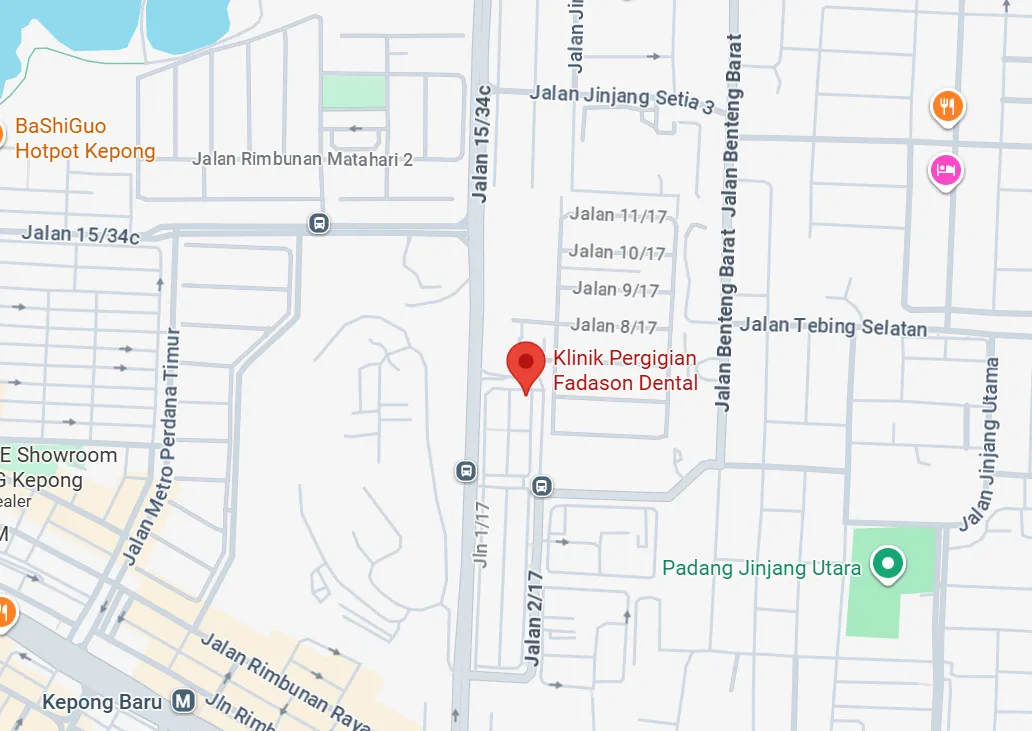
Klinik Pergigian Fadason Dental
98, Jalan 2/17, Taman Fadason, 52000 Kuala Lumpur, Malaysia
We're open daily, schedule for an appointment with us or simply drop by if it's urgent. Navigate to our clinic via the buttons below.